By Bill Best (contact
the author)
January 1998
Appalachian Heritage
(reprinted with permission)
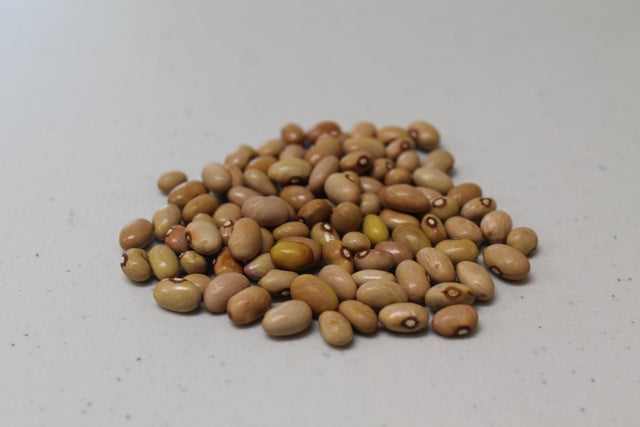
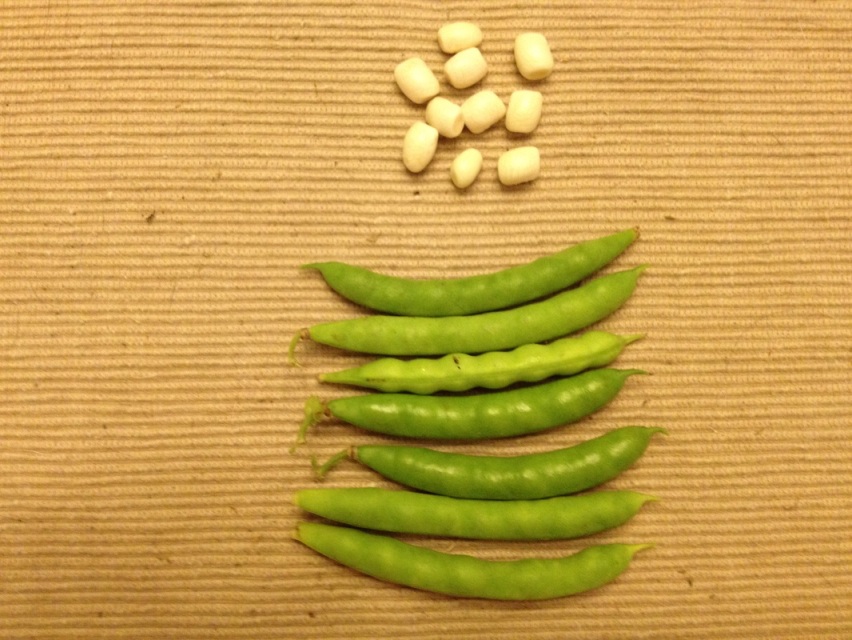
Click a bean variety for a picture and brief
history.
(This will open a new window.)
"Do you have goose bean seeds?"
"Are you familiar with the white fall bean from
Harlan County?"
"Did you know there is a richer lode of genetic
diversity among beans in Appalachia than anywhere else in the
world?"
"Do you know of the greasy grit beans like my grandpa
grew in Leslie County, Kentucky?"
Today, during the winter of 1998, one cannot open
most seed catalogues without being bombarded by heirloom vegetables
and even some seed catalogues are devoted to nothing but heirlooms.
Chefs clamor for them and they are winning taste and texture tests
whenever they're compared with the bland, tough, generic vegetables
which have been bred for long shelf life and ability to withstand
being shipped for thousands of miles by train or truck.
It didn't take too many years
of growing and selling vegetables at farmers' markets for me to
realize that people in general were becoming increasingly dissatisfied
with tough, tasteless tomatoes and beans.
I have become increasingly caught up in the heirloom seed phenomenon
myself (or perhaps I should say that the phenomenon has caught
up with the wisdom of my mother and others like her in the mountains
who helped preserve the old seeds).
When I was growing up in the
mountains of North Carolina, my father practiced scientific farming
whenever he could. He was the first in the community to grow the
new hybrid field corns and one of the first to raise registered
hogs--Poland Chinas, in his case. He influenced me to grow hybrid
corn for a 4-H project when I was in the tenth grade. This led
to my setting a North Carolina one acre production record in 1951,
and changed my life by sending me to the National 4-H Club Congress
in Chicago.
Daddy never got to finish
the seventh grade; Mother completed high school. Daddy and Mother
both were eager to learn about new things, but my mother also
wanted to grow and preserve the old seeds, especially beans. I
guess you could say she believed in preserving at least the best
of the old. Mother listened intently to the home agents who visited
in the community and she participated in their cooking, canning,
and sewlng demonstrations, but I suspect she taught them more
than any of them taught her.
Each summer I helped her pick
the various cornfield beans for eating fresh, for canning, or
drying into what we called "leather britches," and for saving
as seed for the following year's crop.
After being away from home
a few years to attend college at Berea and graduate school at
the University of Tennessee, I left to do active duty in the army
After my term of service was over, I taught a year in Knoxville,
Tennessee. Then my wife and I moved to Berea where I have been
an administrator and teacher at the college for the past thirty
six years.
We quickly bought a farm,
and I again started gardening. It wasn't a conscious decision-just
what I thought I ought to be doing and a continuation of what
I had done most of my life. I also thought that our children should
be exposed to gardening as I had been.
At first, following the path of least resistance while getting
started, I fell into my father's ways of doing things. I ordered
my seeds from the slickest seed catalogues and began making the
Burpees of the world richer and happier and more dominant in gardening
and agriculture in general.
But every fall, when we would
be visiting my family, Mother would give me seed beans which she
had saved from that summer and remind me that I ought to be growing
them. She didn't say why, but simply said that I ought to keep
growing them. Gradually I started growing her beans again, and
today grow nothing but the heirlooms.
Now, thirty years later, it
is plainly evident that Mother was far ahead of her time. She
intuitively felt that the new beans being released by the experiment
stations and seed companies, and the old beans which had been
"improved" by plant breeders, were lacking She knew that they
were becoming increasingly bland and tough and had nothing of
the flavor and tenderness of the beans which had been passed down
in the mountains for generations.
Dr. Elmer Gray, a Berea graduate
from Jackson County, Kentucky, who is a plant geneticist and the
current dean of graduate studies at Western Kentucky University,
is interested in saving as many heirloom beans as possible and
has spoken to groups about the importance of maintaining as much
genetic diversity as possible because, once lost, these plants
will not be available for future use.
When my children were very
young, we started growing vegetables for the Lexington and Berea
farmers' markets (In fact, we were charter members of both.) I
didn't throw away my seed catalogues, but I did start growing
and marketing Mother's beans and I also began going back to the
types of tomatoes I had grown up with.
For about twenty years I have
been an avid collector and grower of many beans and tomatoes which
I have collected throughout the mountains of North Carolina, Tennessee,
Kentucky, and West Virginia. Currently I have at least thirty
excellent beans, all collected from the Appalachian area. I also
grow at least eighty heirloom tomatoes, many of which also came
from the mountains.
I invited people who came
to the farmers' market in Lexington, Kentucky, to bring me samples
of the seeds they talked about and they often did so. Sometimes
they brought seeds from a freezer which had belonged to a grandparent
who had been dead for a dozen years or more. Many also brought
tomato seeds for me which a relative might have squirreled away
in a freezer years ago. Each bean had its own story and was usually
named after the person or family which had propagated it for a
number of years, or even generations. To my regret, I did not
always collect information about the history of the seeds givenme
over the years. But I have realized the value of such and now
try to document each new seed as much as possible and have started
trying to trace down others which I have had for years.
Before going into a discussion
of the various varieties of heirlooms, I want to first characterize
them by types:
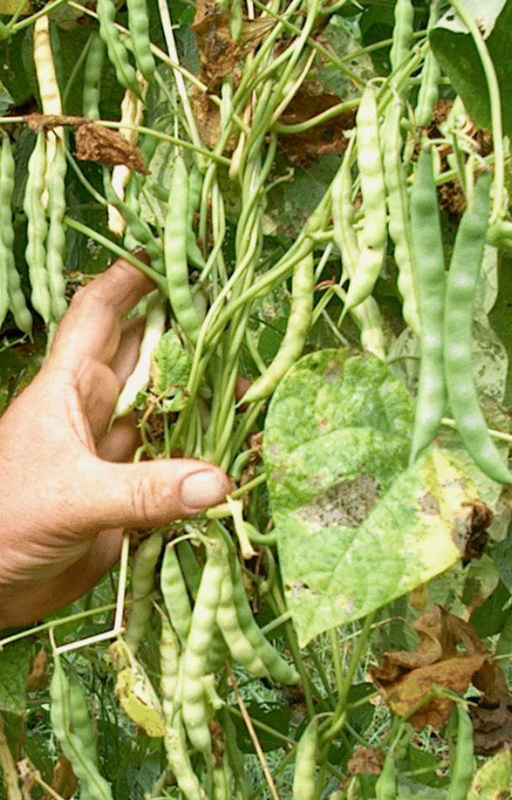
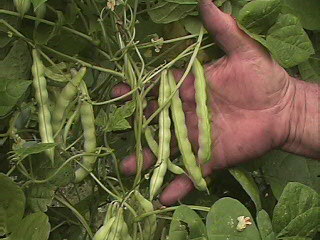
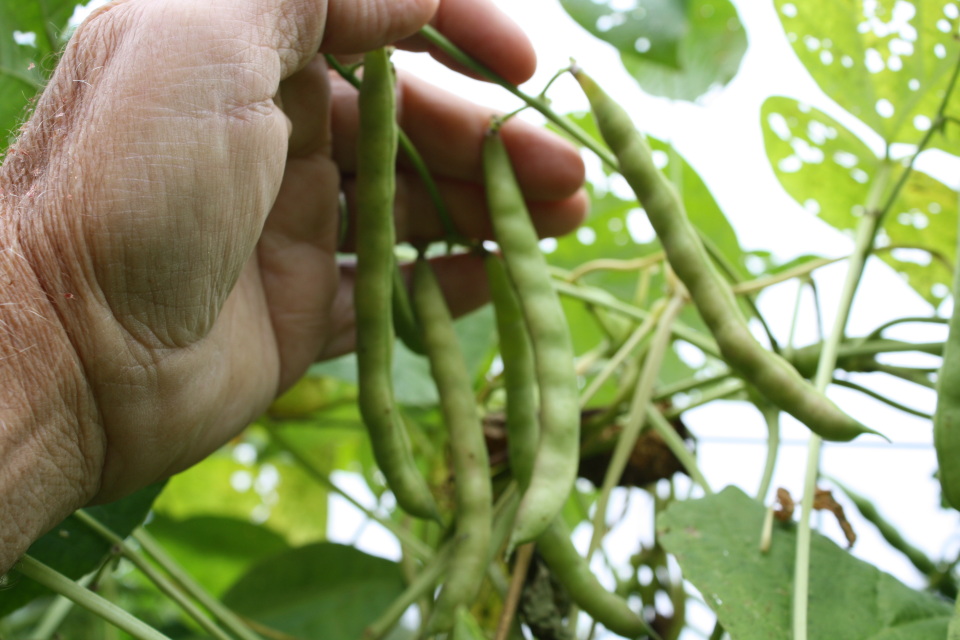
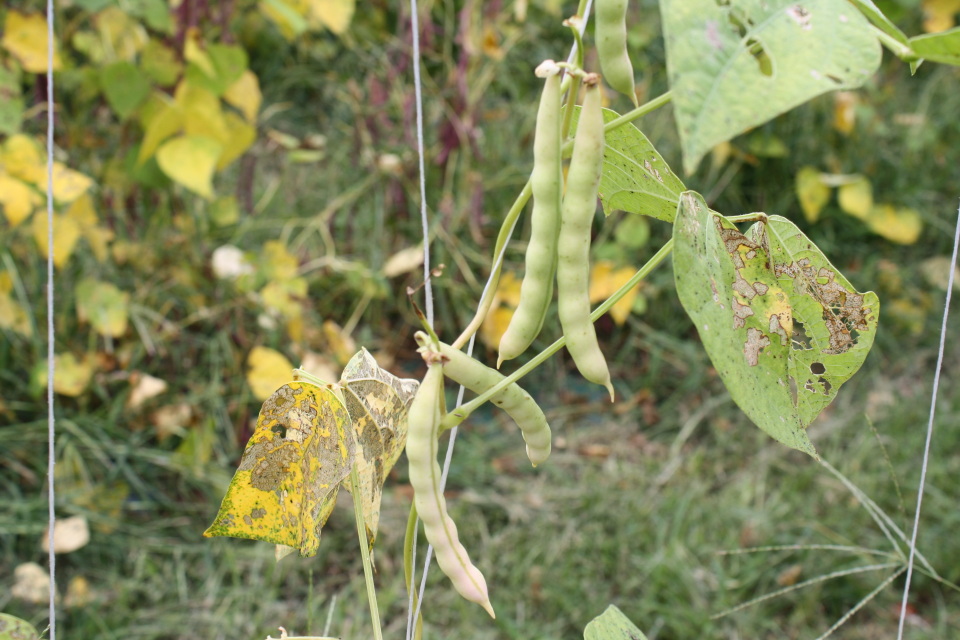
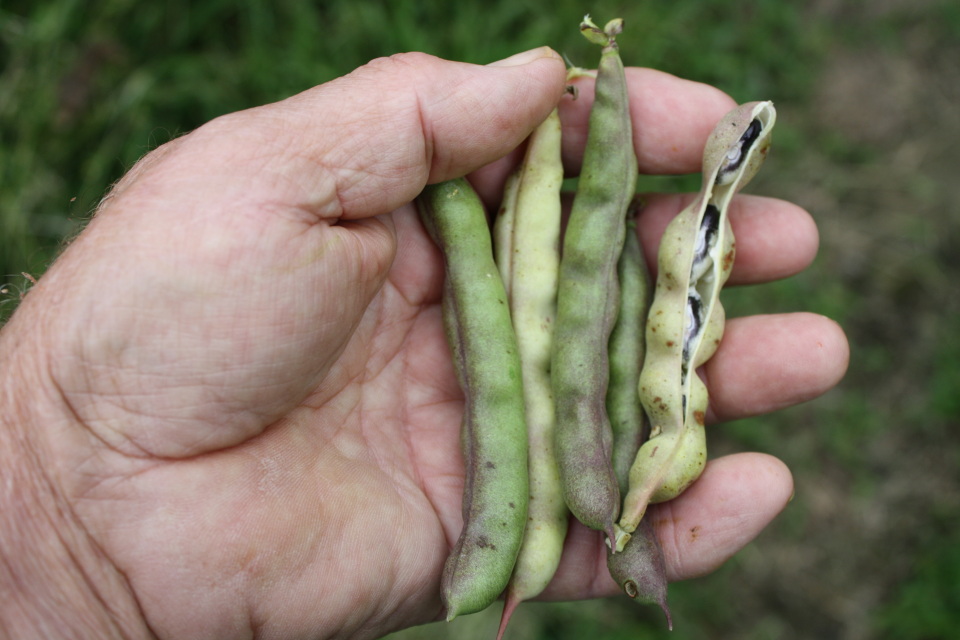
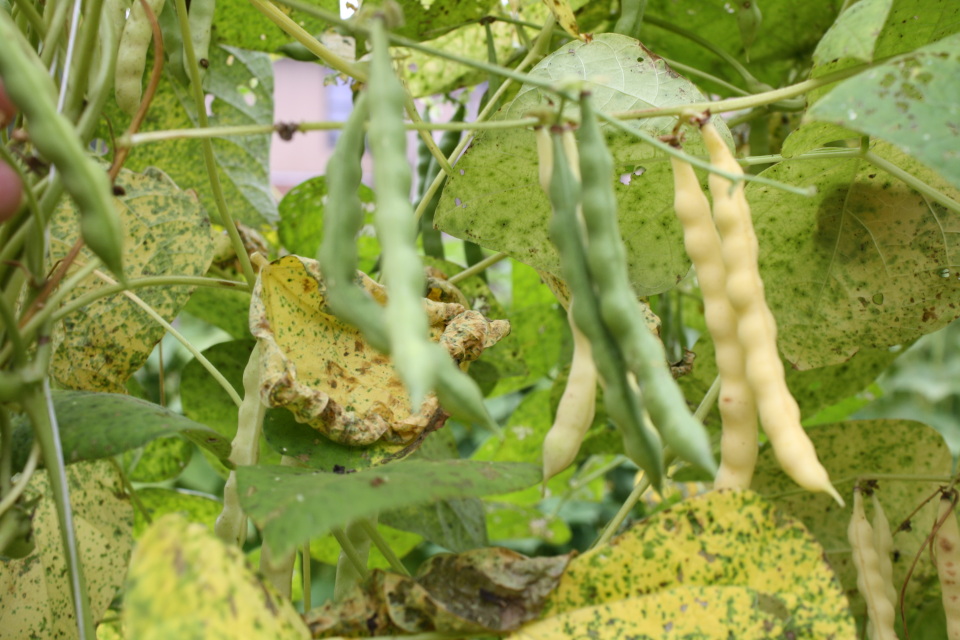
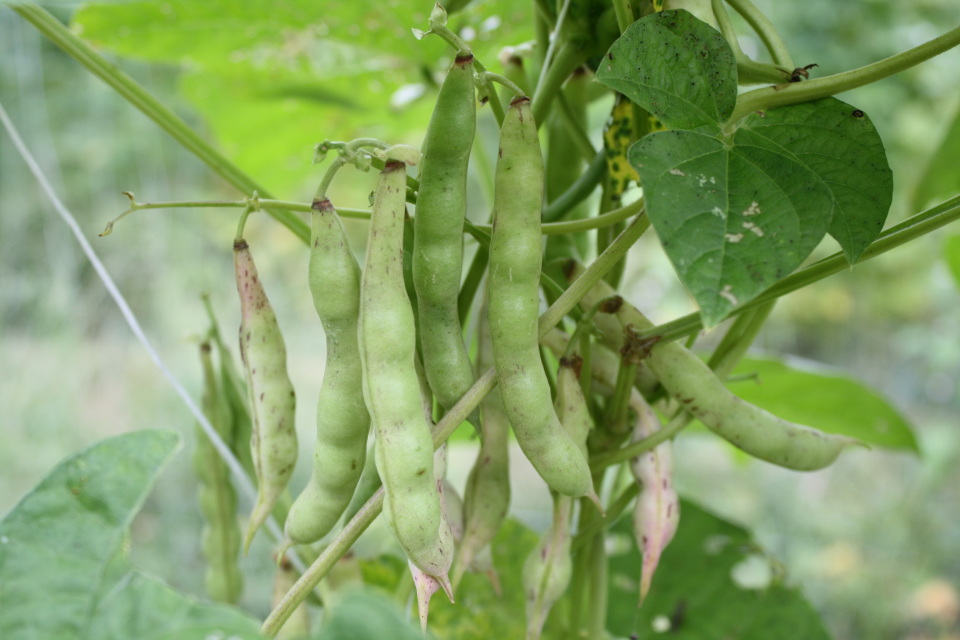
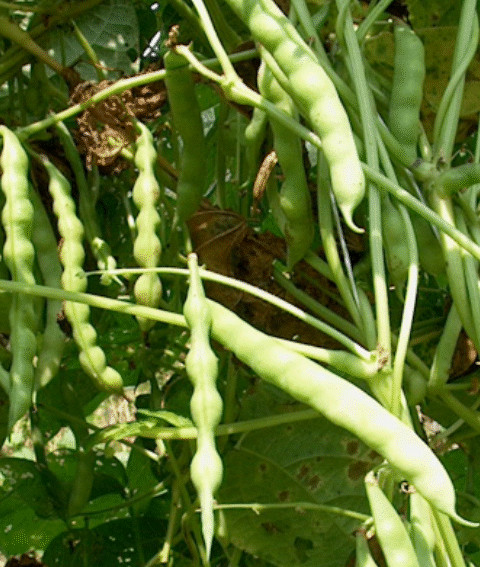
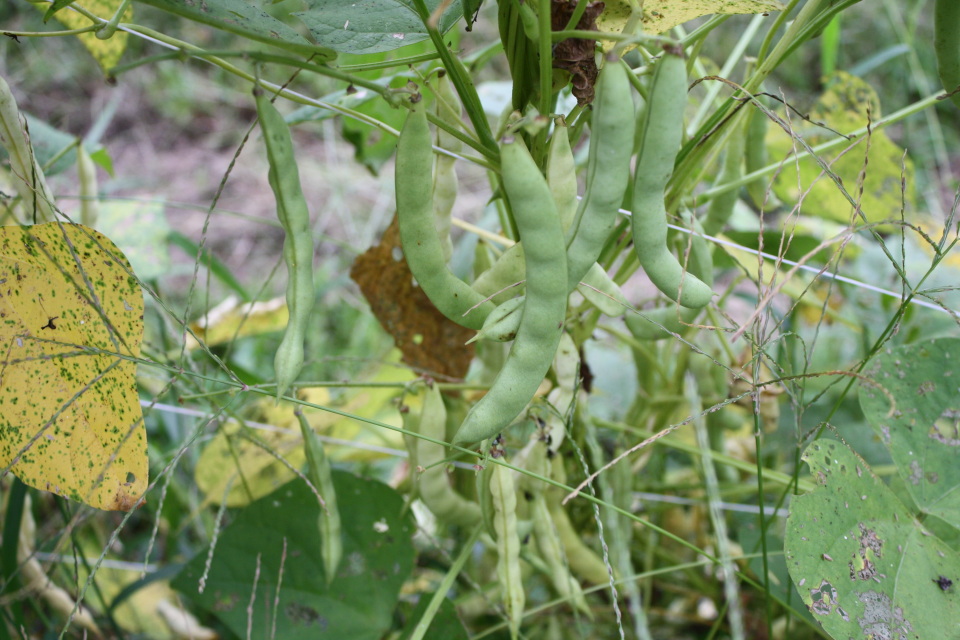
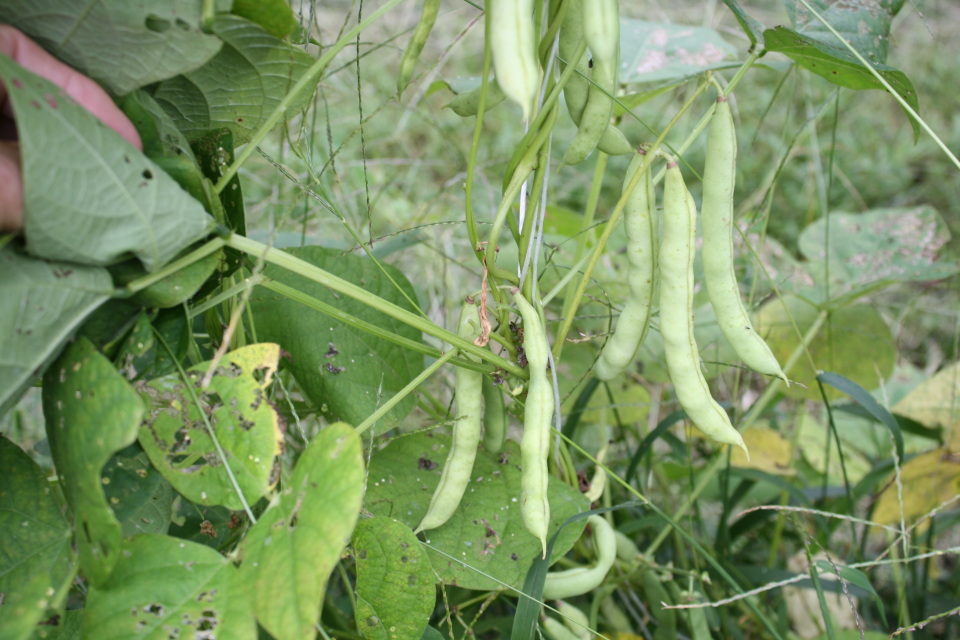
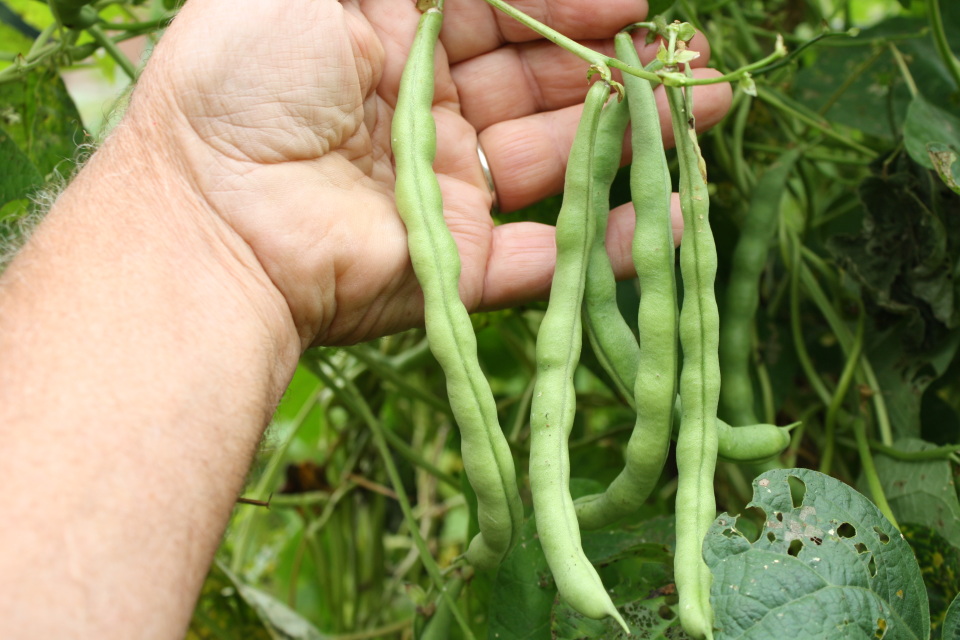
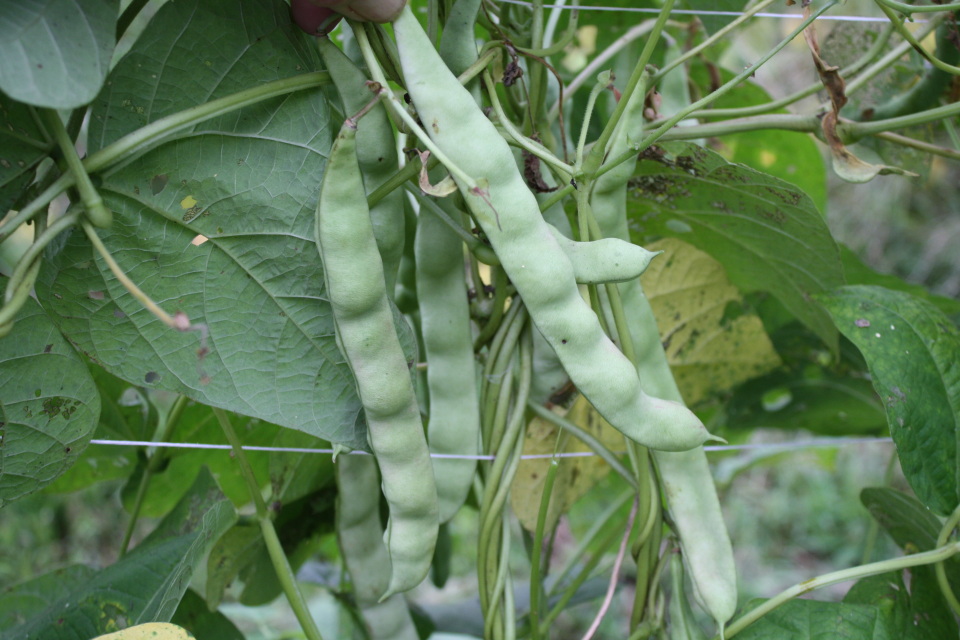
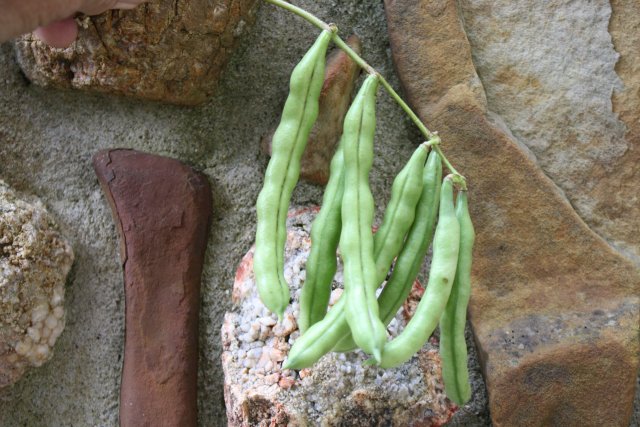
Cornfield Beans. Better than ninety-five
percent of the heirlooms are climbing beans popularly known as
cornfield beans. Historically they were planted in corn fields
and allowed to climb the corn stalks. They were harvested while
the corn was still green and before it was either cut and shocked
or topped above the ears for fodder. Of those climbing beans,
there are three distinct types. One is known simply as the Cornfield
Bean, which just means that it is a climbing bean. Another is
known as the Cut Short, which simply means that the beans
are so closely packed in the pod that they square off on the ends.
In other words, they are "cut short." The final one is The
Greasy Bean, which means that it doesn't have the fuzz of
most beans and is slick or "greasy" in appearance. A bean can
be a combination of all three types and, for example, be a "long
speckled greasy cut-short cornfield bean." These beans are of
many colors and shapes, as will be discussed later.
Bunch Beans. I know of very few heirloom
bunch beans but there are some important ones. These beans do
not send out runners but sit squat on the ground. Commercial or
"institutional" beans are almost always bunch beans which have
been bred for machine harvest. I cannot imagine cornfield beans
being harvested by a machine. One I recently obtained from John
Allen in Cartersville, Kentucky is a brown speckled greasy cut-short.
It is an excellent bean which I will grow for the first time this
summer. He has not yet located its origin but thinks it is from
Western North Carolina, as are so many of the other heirlooms.
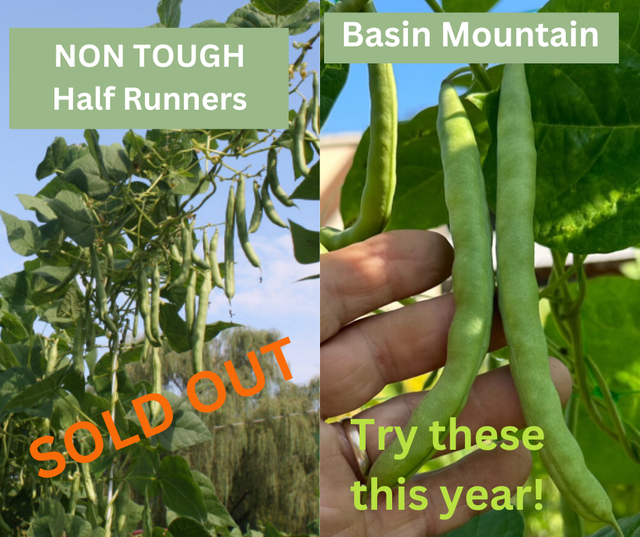
The Half Runner. In the popular imagination,
the half-runner, of which there are many varieties, is the standard
fresh, freezing, and canning bean. It is a heavy yielding bean
which combines some of the best growth characteristics of both
the bunch and cornfield beans, being prolific without being unwieldy.
However, its popularity has led to its near demise.
About thirty to forty years
ago when it became the most popular multipurpose bean, it also
attracted the attention of commercial seed producers. In their
infinite wisdom, and to satisfy the demands of grocers for a long
shelf-life bean, they decided to toughen the bean for shipping
and shelf-life purposes Of course, they had to toughen it significantly.
Consequently, the modern half-runner has become so tough that
many gardeners are refusing to grow it and most customers will
buy it only if they can't get some of the heirlooms. After searching
for many years, I think I have finally found an heirloom half-runner
which I will try for the first time this summer. At this point,
I would advise no one to grow a commercial half-runner.
Lest I be seen simply as someone
who romanticizes the heirlooms for historic purposes only, let
me say that two of my granddaughters, three year old Alex and
two year old Sarah, already know beans about beans. When they
request beans for supper, they mean only the heirlooms without
being romantic about it at all. They mean a bean that has a bean
inside, not the bean hulls that commonly masquerade as beans nowadays.
Both call them "real beans" and I can think of no better way to
describe them. Japanese beetles, Mexican bean beetles, and two
granddaughters crazy about the heirlooms can't all be wrong.
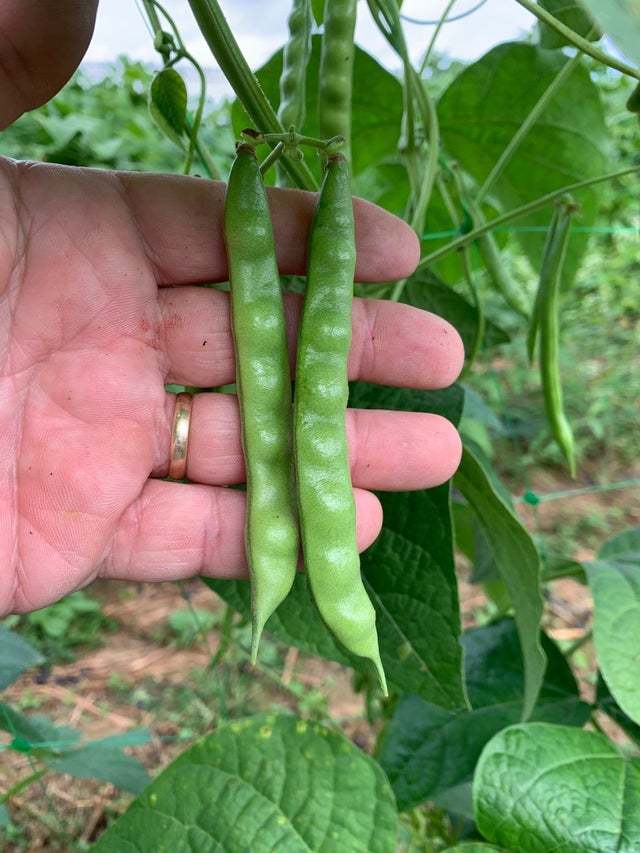
Barnes Mountain Bean. This bean was given
to me by Ott McMaine of Bybee, Kentucky. He got it from a farmer
on Barnes Mountain in Estill County, Kentucky. I have been to
Barnes Mountain several times in the past two years, but have
still not been able to completely trace down the source of this
bean.
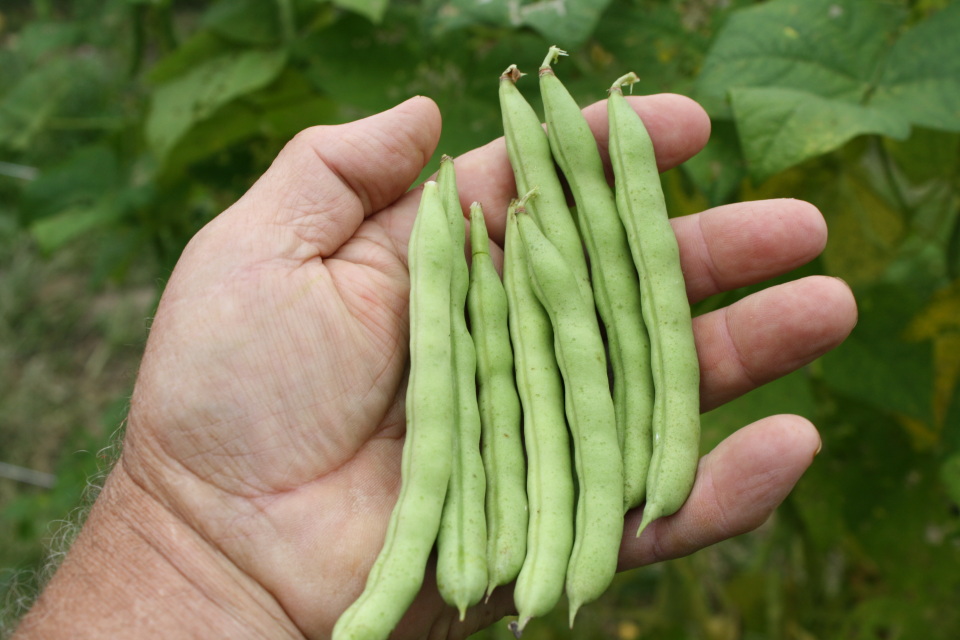
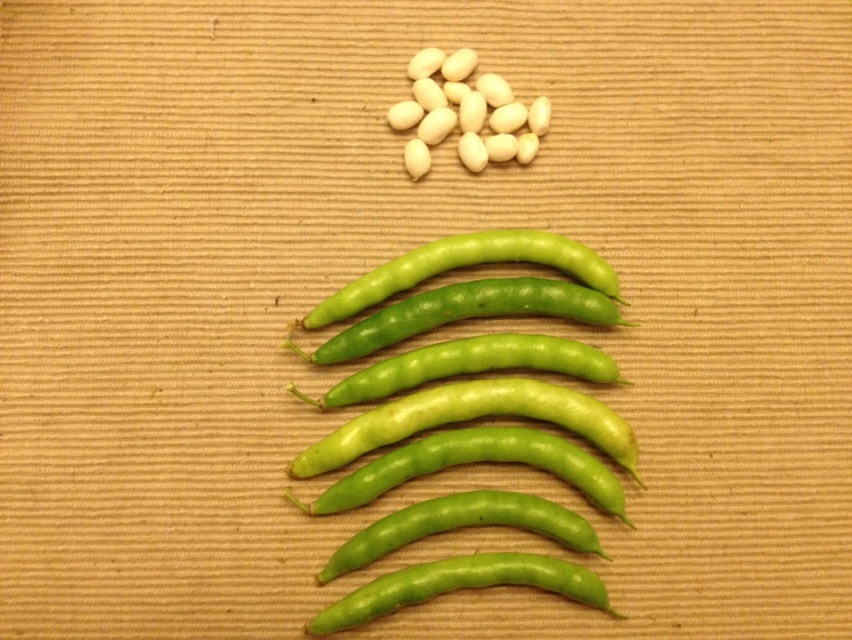
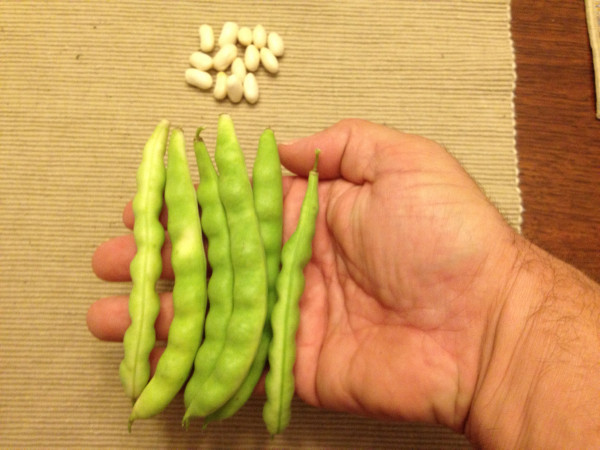
Seay Bean. This is an excellent white cut-short
bean from Buncombe County in North Carolina, named for the Seay
family which developed it. I got the Seay Bean from Mary McLaughlin
in Berea, KY. This bean is from her husband's mother's side of
the family in Buncombe County, North Carolina.
Big John Bean. Along the same line of the
Barnes Mountain bean but somewhat shorter and lighter in color
is this bean, which originated in Letcher County, Kentucky. The
seed was given me by Rosemary Francis of Bourbon County, Kentucky,
whose brother, Pete Ingram, grows them in Indiana, where he now
lives. He also grows a purple fall bean for which he has given
me seed recently and I will grow soon. Pete and Rosemary were
raised in Knott County, Kentucky. He got his beans from his mother
some years ago. I also shared the Seay and Barnes Mountain seeds
with Pete and Rosemary.
Brown Speckled and Long White Greasy Beans.
I have a brown speckled cornfield greasy and a late long white
greasy, both of which I purchased some years ago at the Western
North Carolina farmers' market. When I was unsuccessful in purchasing
the seeds outright, I purchased mature beans instead and shelled
out my own seeds. Both are North Carolina beans and I hope to
trace down the origins of each. Both are also excellent beans
but somewhat prone to infestation by the Mexican bean beetle.
Just as humans do, insects tend to prefer greasy beans, with both
the Mexican bean beetle and the Japanese beetle preferring them
over all others.
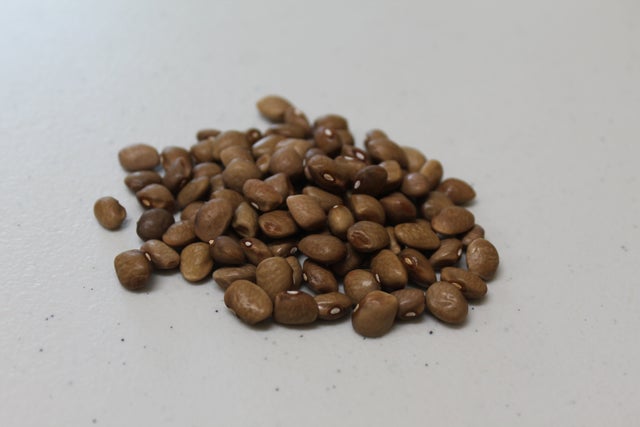
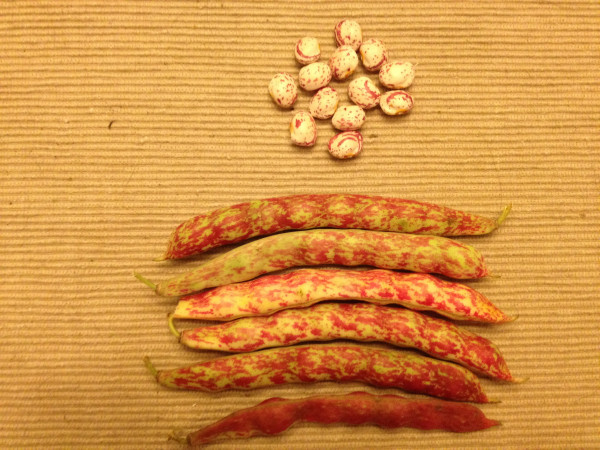
Edwards Bean. This is a brown striped bean
similar in external appearance to the Missouri Wonder but more
tender and with a somewhat milder flavor. These beans are my best
selling brown beans; there is a long list of faithful customers
who wait for them each summer. The seed came from Gray Hawk, in
Jackson County, Kentucky, and was given to me by Margaret Johnson,
a neighbor who has family members still living in the Gray Hawk
area.
Goose Bean. I remember distinctly the "goose
beans" we grew and Mother's story about her grandfather killing
a wild goose and her grandmother taking the beans out of the craw
and beginning to grow them each year. The goose bean is meaty
and tender and I still grow them and share my seeds with others
who want to get a start. (I found out many years later that the
story of the goose bean has became a world-wide myth. But it's
entirely possible that Mother's story about our particular family
goosebeans was factually correct as well.)
Greasy, Cut-short, and White Cornfield Beans.
I recently visited the Asheville Farmer's Market and purchased
three new beans from Clive Whitt who is North Carolina's best
known trader in greasy beans. Clive is eighty four, was an educator
for 43 years, and still works at the Asheville Farmer's Market.
He certainly knows beans about beans (pun intended). Since
I haven't grown the three I got from him yet, I don't know if
either might duplicate a bean I already have.
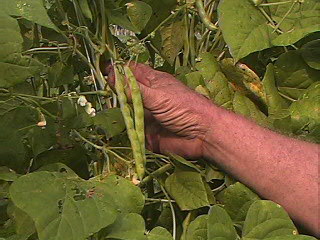
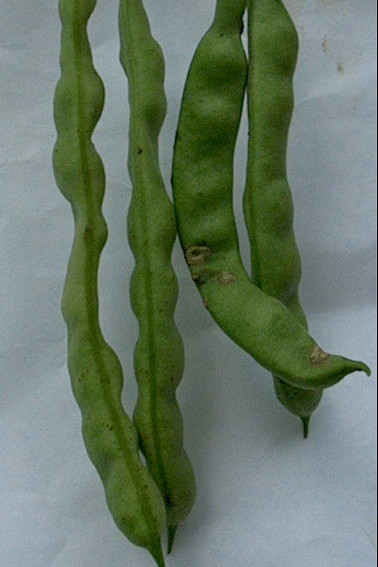
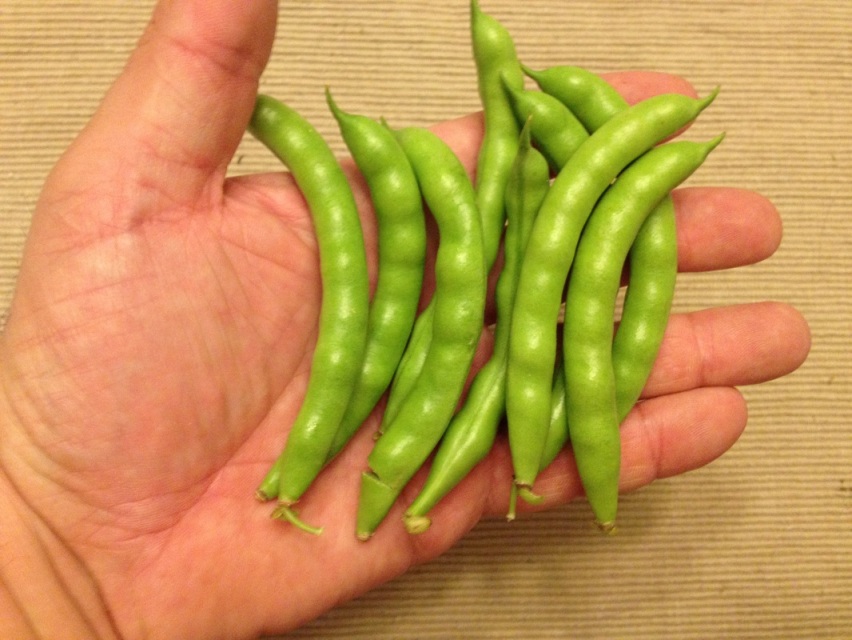
Johnson County Bean. These are very long
and thin greasy cut-short, the likes of which I have never seen
before. A lady in her late eighties gave me the seed in Lexington
a few years ago which had, she said, been in her family for generations.
They are of excellent flavor and texture, but tend to ripen all
at once and have to be picked in the space of a few days. Unfortunately,
I did not get her name and family history. She said she had lived
in Lexington a number of years and that she always kept her Johnson
County seed beans in the freezer
Lazy Wife Bean. Clive Whitt told me about
this bean but he did not have seed for them. He said it is a very
long greasy bean. There are probably more heirloom beans originating
in Madison County, North Carolina, than anywhere else in the country,
especially in the Shelton Laurel area.
Logan Giant. This bean comes from West Virginia.
It was swapped to me by Spot Jennings of Cartersville, Kentucky,
in exchange for some North Carolina long greasies. The Logan Giant
is another excellant tasting brown cornfield bean which has all
the attributes of beans already described.
Nickel Bean. The Nickel Bean of Morgan County,
Kentucky, is an heirloom type of white half-runner which is somewhat
longer than the commercial types which now dominate the seed bins
of feed/seed stores. A man from Laurel County, Kentucky came to
trade some beans after an article about me appeared in a 1987
issue of the Rural Kentuckian (now Kentucky Living).
The article generated a lot of interest and a lot of mail for
me. I received over eighty letters from individuals in six states
the following year. Several visited me in person. Most were wanting
seeds of the little greasy cut-short, but a few gave me interesting
information about beans in general and a few wanted to swap bean
seeds. I answered all letters and sent the beans requested if
I had them.
Ora Speckled Bean. Last year at the Lexington
farmers' market, someone gave me this seed which I grew for the
first time this summer. It is an excellent speckled greasy cut-short
about the size of the two white greasy cut-shorts: It has a wonderful
flavor, and I still have the task of tracing down who gave it
to me.
Tennessee Cornfield Bean. From the foothills
of Tennessee, I have this seed, given me by Harold and Bernease
Wallace of Lexington, Kentucky. The mature bean is moderately
brown in color and is also a greasy cut-short Like the other brown
beans, it is not in high demand but has a loyal following. The
Wallaces also gave me this written information concerning the
bean: "Tennessee Corn Field Bean--Wallace Family from Silver Point,
Tennessee. Carroll and Minnie Wallace reared four sons on these
beans. Has been in the family for more than 63 years." This is
the only bean I have which I know came from Tennessee. For some
reason, most of the heirloom types seem to come from North Carolina
and Kentucky, perhaps because Tennessee has a long history of
commercial bean production and the older types may have died out.
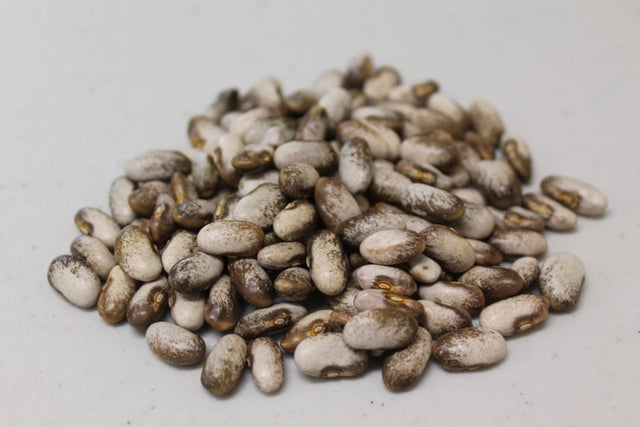
White Fall and Lima Beans, come from Harlan
County, Kentucky; the white fall bean is stringless, but not a
heavy producer. Seeds for both beans were given to me by Dr. Bill
Leach, whose grandfather gave the land for the Pine Mountain Settlement
School. A Berea graduate, Bill now lives in Silver Spring, Maryland,
and works for the U.S. Food and Drug Administration in Rockville,
Maryland. In addition to his beans, Bill also continues to grow
some family open pollinated corn and other vegetables.
White Greasy Cut-Short Bean. I have two white
greasy cut-shorts which are very similar in appearance, one from
Jackson County, Kentucky, and one from Haywood County, North Carolina
(my home county), but which mature at least a month apart even
when planted on the same day. Both have excellent flavor and texture
and are in high demand. I don't grow many of either, however,
because it is so time consuming to pick them. Even at $2.00 per
pound, the common going rate for greasies of all types, it is
hard to justify raising many of them for sale.
In addition
to the beans just described, in my freezer I have seeds from at
least a dozen beans which I have not yet grown. However, I hope
to plant and grow them this coming summer. Included among them
is a bean which grew among some brown speckled greasy cut-shorts
I had been growing a number of years. It is a very long, nongreasy,
white bean totally unlike the parent beans, and I don't even know
what it will taste like since I had only one plant and wanted
to save all the beans for a trial run. I will try them next summer
to see if I have discovered my own personal bean through a mutation
in my own crop.
It is fairly easy to develop
a family bean. They are quite subject to mutation and by carefully
selecting and growing the mutant beans, one can develop a strain
which essentially breeds true each year. Then by selecting among
those beans for a desired quality, it is further possible to slowly
guide the beans so selected in a certain direction. For example,
you can mark the beans which bloom earliest, save only those for
seed, and gradually have a bean which matures two or more weeks
earlier, a desired quality when one is hungry for fresh beans.
Over the years I have tried
a few beans twice and have then stopped growing them for various
reasons. I have one brown greasy cut-short that has something
of a sulfur flavor which cuts down on its appeal significantly.
The Maupin brown bean has an excellent flavor but is so disease
prone that I stopped growing it. Perhaps in a very dry summer,
it would not have so much disease.
To say these beans I have
been describing are becoming popular is an understatement. I could
not possibly grow enough to supply the demand in Lexington, not
to mention the rest of Kentucky, Any visitor to the Western Carolina
farmers' market at Asheville from July through October can witness
the wonderful variety of greasy beans being sold by any number
of producers and vendors at prices double, triple, and sometimes
quadruple those of commercial or institutional beans.
Concurrent with the renewed
interest in heirloom vegetables, it often occurs to me that heirloom
values might also be making a comeback for many of the same reasons.
Mainstream values, brought into the mountains by Northeastern
industrialists and their missionary brothers and sisters, have
proven to be bland and tough and to ship well, but when it comes
to human relationships, they leave much to be desired. Our older
values of neighborliness, honesty, trust, and compassion, while
perhaps considered trite and naive by the sophisticated, just
might be a good antidote for some of the cynicism bred by our
large generic and impersonal institutions.